
Introduction
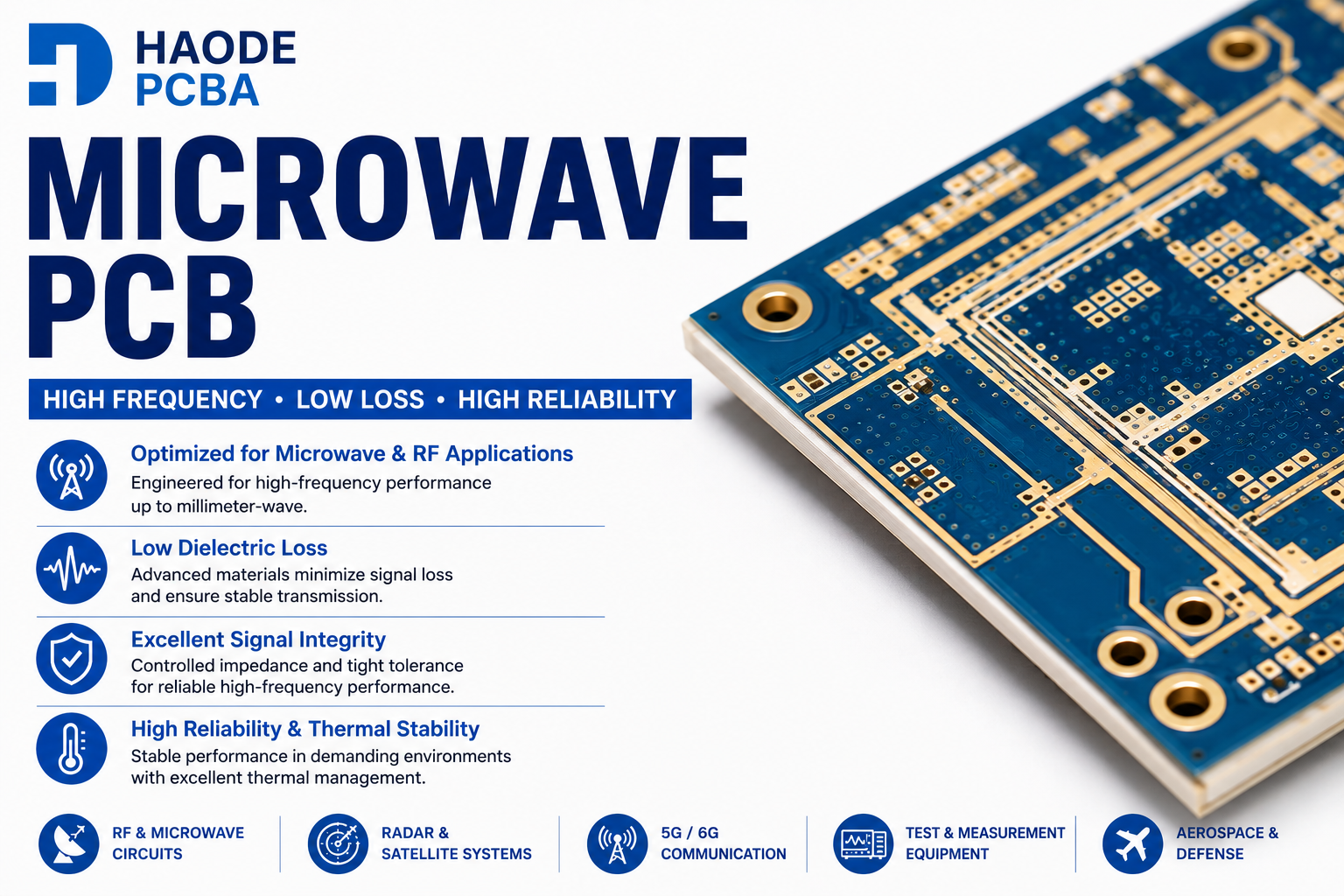
Microwave PCB technology is designed for electronic systems that operate at microwave frequencies where signal loss, impedance variation, and electromagnetic interference become critical design challenges. Unlike standard printed circuit boards, microwave PCBs require specialized low-loss materials, precise manufacturing control, and advanced RF design techniques.
Microwave PCB solutions are widely used in radar systems, satellite communication, aerospace electronics, wireless infrastructure, and advanced defense applications.
Selecting the right microwave PCB material and manufacturing partner is essential because even minor changes in dielectric properties or circuit geometry can affect signal accuracy, transmission efficiency, and overall system performance.
Quick Answer
A Microwave PCB is a specialized printed circuit board designed for microwave frequency applications, typically above 1 GHz. It uses low-loss dielectric materials such as Rogers, PTFE, and other high-frequency laminates to achieve excellent signal integrity, stable impedance control, and minimal transmission loss.
What Is A Microwave PCB?
A microwave PCB is a circuit board optimized for transmitting microwave signals.
At microwave frequencies, electrical signals behave differently compared with traditional low-frequency circuits. PCB traces become transmission lines, and every design element can influence electromagnetic performance.
Important microwave PCB factors include:
- Dielectric constant
- Dissipation factor
- Trace geometry
- Copper roughness
- Layer structure
- Grounding design
- Impedance control
Because of these requirements, microwave PCB manufacturing requires more advanced materials and tighter process control than conventional PCB production.
Microwave PCB Vs Standard PCB
| Feature | Microwave PCB | Standard PCB |
|---|---|---|
| Frequency Range | GHz Applications | Low To Medium Frequency |
| Material | Low Loss Laminates | FR4 Mainly |
| Signal Loss | Extremely Important | Less Critical |
| Impedance Control | Strict | Moderate |
| Design Complexity | High | Lower |
| Applications | Radar, Satellite, RF | General Electronics |
Microwave PCB Materials
Material selection directly affects microwave performance.
The most common microwave PCB materials include:
Rogers Microwave PCB Materials
Rogers is one of the most popular choices for microwave circuits.
Common materials include:
Rogers RT5880
RT5880 is designed for ultra-high-frequency applications.
Advantages:
- Extremely low dielectric loss
- Excellent microwave performance
- Stable electrical properties
Applications:
- Satellite antennas
- Radar systems
- Aerospace electronics
Rogers RO4350B
RO4350B provides an excellent balance between performance and manufacturability.
Advantages:
- Low loss
- Good thermal stability
- Compatible with standard PCB processes
Applications:
- RF modules
- Communication systems
- Automotive radar
Rogers RO4003C
RO4003C provides reliable high-frequency performance with easier manufacturing.
Applications:
- Wireless communication
- GPS systems
- Microwave circuits
PTFE Microwave PCB Materials
PTFE-based materials are widely used in advanced microwave applications.
Advantages:
- Extremely low signal loss
- Excellent dielectric performance
- Stable high-frequency characteristics
Applications:
- Military radar
- Satellite communication
- Microwave antennas
However, PTFE materials require specialized manufacturing expertise because they behave differently from traditional PCB laminates.
Microwave PCB Design Guidelines
Designing a reliable microwave PCBA requires careful control of electrical characteristics.
Controlled Impedance Design
Impedance control is one of the most important microwave PCBA requirements.
Common impedance values include:
- 50Ω RF Transmission Lines
- 75Ω Systems
Manufacturers must accurately control:
- Trace width
- Dielectric thickness
- Copper thickness
- Material properties
Poor impedance matching can cause:
- Signal reflection
- Power loss
- Reduced system efficiency
Microwave PCB Stackup Design
The stackup directly affects microwave performance.
Recommended practices include:
- Keep RF layers close to ground planes
- Maintain consistent dielectric thickness
- Avoid unnecessary layer transitions
- Use proper reference planes
A well-designed stackup improves:
- Signal integrity
- EMI performance
- Manufacturing consistency
RF Trace Design For Microwave PCB
Microwave signals require carefully designed transmission lines.
Important considerations include:
Trace Width Control
Small variations can affect impedance.
Bend Optimization
Avoid sharp 90-degree corners.
Ground Return Path
Maintain continuous current return paths.
Via Optimization
Reduce unnecessary vias to minimize parasitic effects.
Microwave PCB Manufacturing Process
Manufacturing microwave PCBs requires precision at every stage.
Engineering Review
Before production, engineers review:
- Material selection
- Stackup requirements
- Impedance targets
- Manufacturing limitations
Material Preparation
Microwave laminates require controlled storage and handling.
Important factors include:
- Moisture control
- Material traceability
- Surface cleanliness
Lamination
Lamination requires precise control of:
- Temperature
- Pressure
- Time
Incorrect parameters may affect dielectric thickness and RF performance.
Drilling And Plating
Microwave PCB manufacturing requires:
- Accurate drilling
- Uniform copper plating
- Reliable layer connections
Surface Finish Selection
Common options include:
- ENIG
- Immersion Silver
- OSP
The correct finish depends on electrical requirements and assembly conditions.
Microwave PCB Testing
Quality testing may include:
Electrical Testing
Checks:
- Open circuits
- Short circuits
- Connectivity
Impedance Testing
Verifies:
- Transmission line performance
- RF impedance accuracy
AOI Inspection
Detects:
- Pattern defects
- Manufacturing errors
Microwave PCB Applications
Radar Systems
Microwave PCBs are widely used in:
- Automotive radar
- Weather radar
- Military radar
They provide accurate signal transmission and reliable detection performance.
Satellite Communication
Applications include:
- Satellite antennas
- Space communication equipment
- Navigation systems
Aerospace Electronics
Microwave PCBs support:
- Avionics systems
- Communication equipment
- Navigation devices
5G Communication
Modern wireless infrastructure requires microwave PCBA technology for:
- Base stations
- Antenna modules
- RF systems
Microwave PCB Cost Factors
The price of microwave PCBA depends on:
- Material type
- Frequency requirements
- Layer count
- Board complexity
- Surface finish
- Testing requirements
Advanced materials such as Rogers and PTFE increase material cost but provide necessary performance advantages.
How To Choose A Microwave PCB Manufacturer
A professional Microwave PCB Manufacturer should provide:
High-Frequency Material Experience
Including:
- Rogers laminates
- PTFE materials
- Low-loss substrates
Engineering Support
Including:
- Stackup optimization
- Impedance analysis
- DFM review
Manufacturing Capability
Including:
- Precision fabrication
- RF testing
- Prototype and mass production
Quality Control
Including:
- Material traceability
- Electrical testing
- Process inspection
Why Choose Haode PCBA For Microwave PCB Manufacturing?
Haode PCBA provides customized Microwave PCB Manufacturing And Assembly Services for global customers.
Our capabilities include:
- Rogers PCB fabrication
- High-frequency PCB production
- RF PCB manufacturing
- Controlled impedance testing
- SMT assembly
- Component sourcing
- Prototype development
- Mass production
With professional engineering support and advanced manufacturing capabilities, Haode PCBA helps customers develop reliable microwave electronic products.
Conclusion
Microwave PCB technology is essential for modern RF, radar, aerospace, satellite, and communication systems. Compared with standard PCBs, microwave circuits require specialized materials, advanced design techniques, and strict manufacturing control.
Choosing the right microwave PCBA material and experienced manufacturer ensures better signal integrity, higher reliability, and improved product performance.