What Is A PCB?
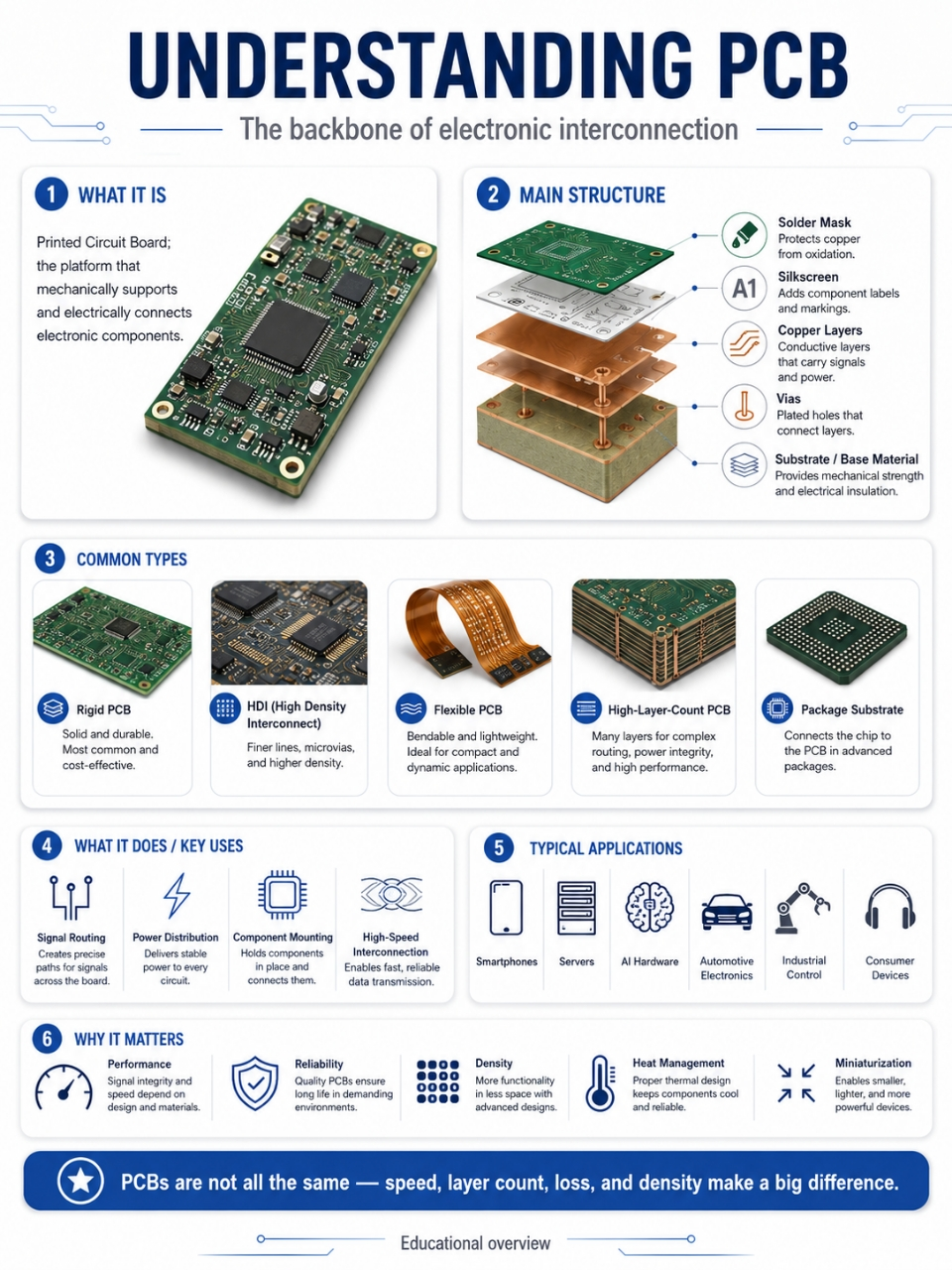
A PCB (Printed Circuit Board) Is The Foundation Of Almost Every Electronic Device. It Is A Flat Board That Mechanically Supports And Electrically Connects Electronic Components Using Conductive Pathways, Also Known As Traces. In Simple Terms, A PCB Acts As The “Nervous System” Of Electronics, Enabling Signals And Power To Flow Between Components Efficiently.
Modern Electronics Rely Heavily On Circuit Boards, Including Smartphones, Computers, Automotive Systems, And Industrial Equipment.
How A Printed Circuit Board Works
A Printed Circuit Board Is Made Up Of Multiple Layers, Each Serving A Specific Function. The Key Structure Includes:
- Substrate (Base Material, Usually FR4 Fiberglass)
- Copper Layers For Electrical Connections
- Solder Mask For Protection
- Silkscreen For Labeling Components
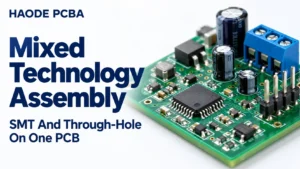
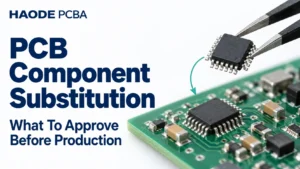
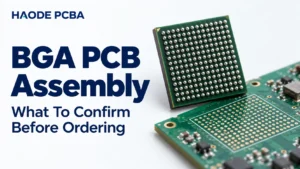
When Components Like Resistors, Capacitors, And ICs Are Mounted Onto The Board, They Form A Complete Electronic System. This Process Is Known As PCB Assembly (PCBA).
Main Types Of PCB Boards
Different Applications Require Different PCB Manufacturing Designs:
- Single-Layer PCB – Simple Electronics And Low-Cost Devices
- Double-Layer PCB – More Complex Consumer Electronics
- Multilayer PCB – High-Performance Systems Like Servers And Telecom Equipment
- Flexible PCB (FPC) – Bendable Circuits Used In Compact Devices
- Rigid PCB – Strong And Stable Boards For Industrial Use
Each Type Plays A Role In Modern Electronics Manufacturing And Product Design.
PCB Manufacturing Process
The Process Of PCB Fabrication Involves Several Precise Steps:
- Circuit Design Using CAD Software
- Printing The Circuit Layout Onto Laminate
- Etching Copper Layers
- Drilling Holes For Components
- Plating And Surface Finishing
- Applying Solder Mask And Silkscreen
High-Quality PCB Production Ensures Stable Performance, Durability, And Signal Integrity.
PCB Vs PCBA: What Is The Difference?
A Common Confusion In Electronics Is The Difference Between PCB And PCBA:
- PCB = Bare Board Without Components
- PCBA = Fully Assembled Board With Electronic Components Soldered In Place
In Real-World Applications, PCB Assembly Services Turn A Bare Board Into A Functional Electronic Product.
Why PCB Design Matters
Good PCB Design Directly Affects:
- Signal Stability
- Heat Dissipation
- Product Lifespan
- Manufacturing Cost
Engineers Must Carefully Plan Routing, Component Placement, And Grounding To Avoid Interference And Failure.
Applications Of PCB Technology
Today, Printed Circuit Boards Are Used In Almost Every Industry:
- Consumer Electronics (Phones, Laptops, TVs)
- Automotive Systems (ECU, Sensors, Lighting Control)
- Industrial Automation Equipment
- Medical Devices
- IoT And Smart Home Systems
Without PCB Technology, Modern Electronics Would Not Exist In Their Current Form.
Final Thoughts
Understanding PCB Boards Is Essential For Anyone Involved In Electronics Design, Manufacturing, Or Product Development. From PCB Fabrication To PCB Assembly, Every Step Plays A Critical Role In Creating Reliable Electronic Systems.
For High-Quality Production, Many Companies Choose Professional PCB Manufacturing And Assembly Services To Ensure Performance, Consistency, And Scalability.