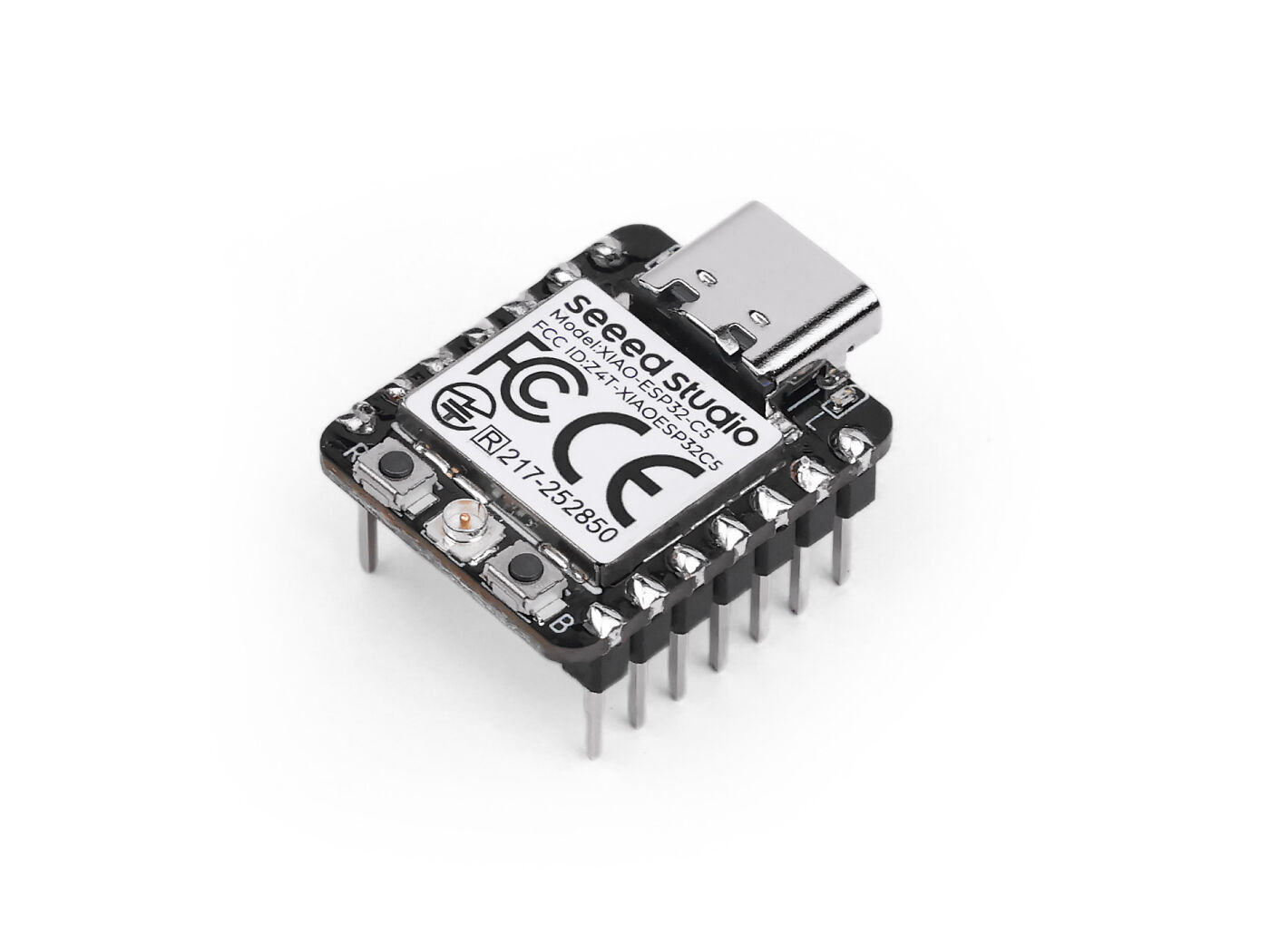
Wireless IoT devices need stable connectivity, low power consumption, strong security, and reliable PCB-level design. For many smart devices, Espressif’s ESP32-C series has become a popular choice because it combines Wi-Fi, Bluetooth, and low-power wireless protocols in compact SoCs.
The ESP32-C5 and ESP32-C6 both target modern IoT applications. However, they are not the same chip. ESP32-C5 focuses on 2.4 GHz and 5 GHz dual-band Wi-Fi 6, while ESP32-C6 focuses on cost-effective 2.4 GHz Wi-Fi 6 with Bluetooth LE, Zigbee, and Thread support. This makes the right choice depend on your product design, wireless environment, PCB layout, power target, and application needs.
What Is ESP32-C5?
ESP32-C5 is a RISC-V wireless SoC designed for high-efficiency IoT connectivity. It supports 2.4 GHz and 5 GHz Wi-Fi 6, Bluetooth 5 LE, and IEEE 802.15.4 for Zigbee and Thread applications. This makes ESP32-C5 Wi-Fi 6 especially useful for products that need more flexible wireless network options.
One important point in recent ESP32-C5 News is that Espressif announced ESP32-C5 mass production on April 30, 2025. This means developers and manufacturers can consider it for real product planning, not only early evaluation.
Because of its 5 GHz support, ESP32-C5 Dual Band Wi-Fi can help reduce congestion in crowded 2.4 GHz environments. This is useful for smart gateways, wireless controllers, industrial IoT nodes, smart home hubs, and connected devices that need lower latency.
What Is ESP32-C6?
ESP32-C6 is Espressif’s 2.4 GHz Wi-Fi 6 SoC with Bluetooth 5 LE and IEEE 802.15.4 support. It also supports Thread and Zigbee, which makes it suitable for smart home devices, Matter-related products, wireless sensors, and low-power connected equipment.
Compared with ESP32-C5, ESP32-C6 does not offer 5 GHz Wi-Fi. However, it remains a strong choice for many IoT products because most low-power smart devices still work well on 2.4 GHz networks. It also provides a mature development path for connected products that need Wi-Fi, BLE, Thread, or Zigbee in one chip.
ESP32-C5 Vs ESP32-C6: Main Difference
The biggest difference is wireless band support. ESP32-C5 supports dual-band Wi-Fi 6 across 2.4 GHz and 5 GHz. ESP32-C6 supports Wi-Fi 6 only in the 2.4 GHz band.
This difference matters in real product design. A smart plug, sensor, thermostat, or basic smart home device may not need 5 GHz Wi-Fi. In that case, ESP32-C6 can be a practical and cost-effective choice. However, a gateway, controller, smart display, audio device, or higher-performance IoT product may benefit from ESP32-C5 because 5 GHz Wi-Fi can reduce interference and improve network flexibility.
Why ESP32-C5 Is Better For Dual-Band IoT Devices
ESP32-C5 is the better option when your product needs stronger wireless flexibility. In busy homes, offices, apartments, factories, and commercial buildings, 2.4 GHz networks often face congestion from routers, Bluetooth devices, cameras, sensors, and many smart home products.
With 5 GHz support, ESP32-C5 gives product developers another wireless path. This can improve user experience in devices that require faster response, more stable connections, or lower latency. For this reason, ESP32-C5 IoT Module designs are attractive for advanced wireless products, smart control panels, IoT gateways, and multi-protocol edge devices.
For companies building next-generation connected products, ESP32-C5 also provides better future readiness. As more routers support Wi-Fi 6 and dual-band networks, ESP32-C5 can help new IoT devices stay compatible with modern wireless environments.
Why ESP32-C6 Is Still A Strong Choice
ESP32-C6 is still an excellent choice for many electronic products. It supports 2.4 GHz Wi-Fi 6, Bluetooth 5 LE, Thread, and Zigbee. This makes it useful for connected devices that need stable wireless control but do not require 5 GHz Wi-Fi.
For battery-powered sensors, Matter endpoints, smart switches, lighting control, environmental monitors, and compact smart home products, ESP32-C6 can be more than enough. It can also simplify cost control for projects that need reliable wireless performance without paying for unused dual-band capability.
If your product mainly sends small data packets, receives control commands, or works as a low-power smart home endpoint, ESP32-C6 may be the better commercial choice.
ESP32-C5 PCB Design Considerations
Good ESP32-C5 PCB Design is important because dual-band wireless performance depends heavily on RF layout quality. The antenna area, ground plane, impedance control, component placement, and power routing all affect signal stability.
For 5 GHz Wi-Fi, layout quality becomes even more important. Engineers should keep the RF path short and clean, avoid noisy signal traces near the antenna, and follow the module or chip reference design closely. A poor PCB layout can reduce wireless range, increase packet loss, and weaken product performance.
In advanced products, Dual-Band Wi-Fi 6 PCB Design should also consider enclosure material, antenna location, thermal performance, and interference from displays, motors, relays, power circuits, and high-speed interfaces.
ESP32-C5 PCB Assembly For Reliable Products
After PCB design, ESP32-C5 PCB Assembly also affects final product quality. Wireless IoT boards often include small passive components, RF matching parts, power management circuits, connectors, sensors, and communication interfaces. These parts need accurate placement and reliable soldering.
A professional assembly process should include solder paste inspection, SMT placement, reflow soldering, AOI inspection, X-ray inspection when needed, and functional testing. For wireless products, RF testing and firmware verification can also help confirm real-world performance.
This is why many electronic product companies choose experienced factories for ESP32-C5 projects. Strong assembly control can reduce failures and improve production consistency.
ESP32-C5 Zigbee Thread For Smart Home Devices
ESP32-C5 Zigbee Thread support makes the chip more flexible for smart home ecosystems. Wi-Fi handles high-speed network communication, while Zigbee and Thread support low-power mesh networking.
This combination is useful for smart home gateways, Matter bridges, wireless control panels, and multi-protocol devices. A single product can connect to Wi-Fi networks while also supporting low-power device communication through Thread or Zigbee.
For an ESP32-C5 Smart Home Device, this multi-protocol capability can improve compatibility and product value. It allows developers to build products for modern homes where Wi-Fi, Bluetooth, Zigbee, Thread, and Matter may all exist together.
ESP32-C5 PCBA Manufacturing For IoT Products
Reliable ESP32-C5 PCBA Manufacturing requires more than simple SMT production. It needs engineering review, BOM control, RF layout understanding, component sourcing, assembly accuracy, testing, and stable quality management.
Before production, manufacturers should review Gerber files, BOM, pick-and-place files, stencil design, RF layout, antenna clearance, and test points. During production, they should control soldering quality, component orientation, moisture-sensitive devices, and inspection standards.
For wireless IoT products, testing is especially important. The factory may need to check power consumption, Wi-Fi connection, Bluetooth communication, Zigbee or Thread function, firmware loading, and product-level operation. These steps help reduce field failures after shipment.
Which Chip Is Better For Wireless IoT Devices?
ESP32-C5 is better if your product needs 5 GHz Wi-Fi, dual-band wireless flexibility, lower network congestion, or stronger future-proof connectivity. It is a strong choice for smart gateways, advanced IoT modules, smart home hubs, wireless control panels, industrial IoT devices, and products that need stable performance in crowded network environments.
ESP32-C6 is better if your product only needs 2.4 GHz Wi-Fi 6, BLE, Zigbee, or Thread in a cost-sensitive design. It is suitable for smart sensors, switches, lights, thermostats, meters, small appliances, and Matter-enabled smart home endpoints.
In simple terms, choose ESP32-C5 for dual-band performance and advanced wireless products. Choose ESP32-C6 for mature, cost-effective, low-power IoT devices.
Final Thoughts
ESP32-C5 and ESP32-C6 are both useful chips for modern wireless IoT devices. The better choice depends on your product goal.
If your design needs dual-band Wi-Fi 6, more network flexibility, and advanced multi-protocol support, ESP32-C5 is the stronger option. If your project focuses on low-cost 2.4 GHz smart home devices, ESP32-C6 remains a practical and reliable choice.
For electronic product development, the chip is only one part of success. Good PCB layout, stable component sourcing, professional assembly, and complete testing are also essential. With the right design and manufacturing partner, both ESP32-C5 and ESP32-C6 can support reliable wireless IoT products for smart homes, industrial control, connected sensors, and next-generation electronic devices.