
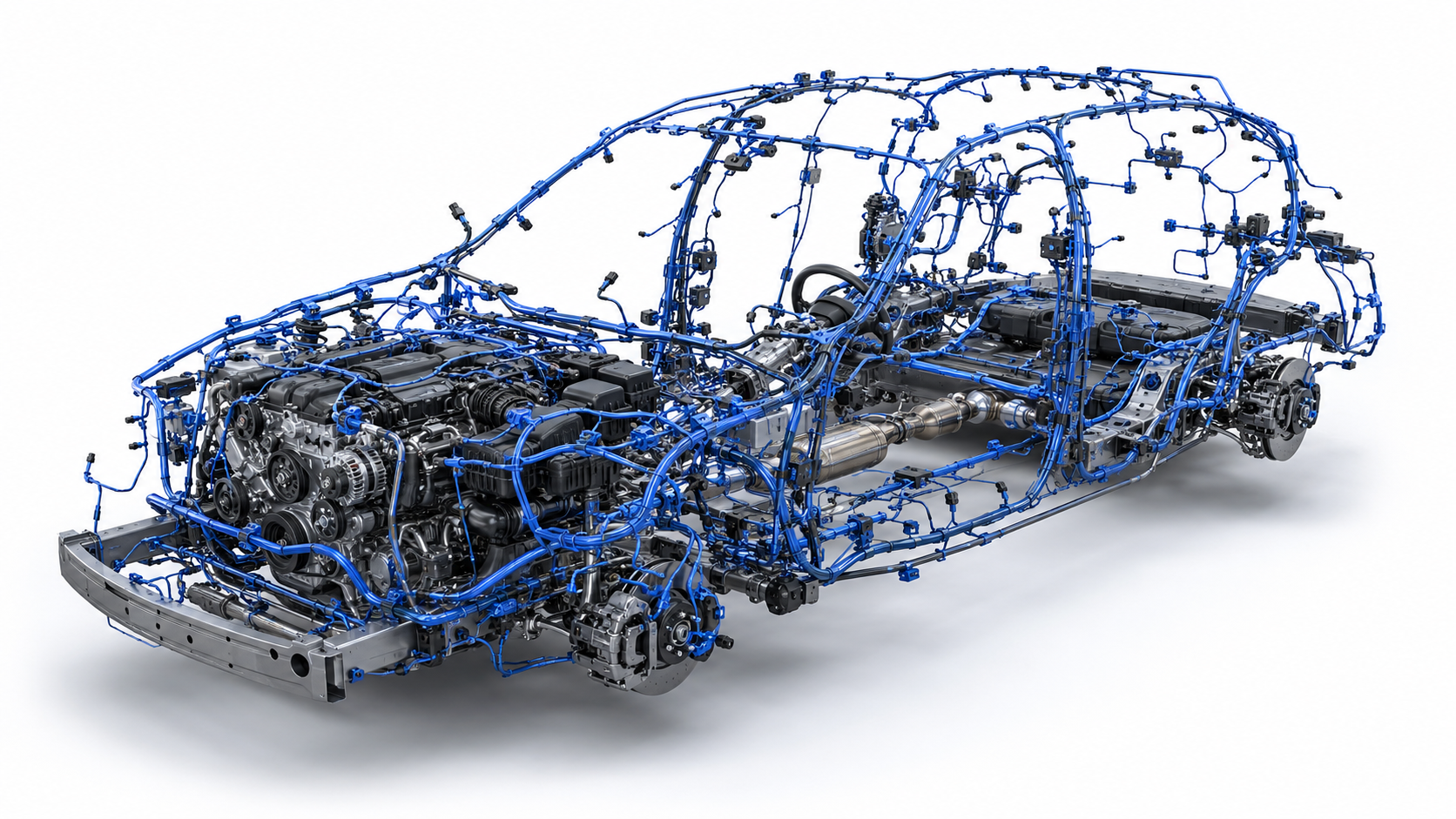
A Car Electrical Harness Organizes Power, Signal, And Data Connections Into One Protected System, Helping Modern Vehicles Operate Safely, Efficiently, And Reliably.
What Is A Car Electrical Harness?
A Car Electrical Harness Is A Bundled Electrical System That Connects Vehicle Components Through Wires, Connectors, Terminals, Sleeves, Tapes, And Protective Looms.
It Transfers Power And Signals To Lights, Sensors, Engines, Doors, Cameras, Braking Systems, Infotainment Units, Batteries, And Electronic Control Modules.
Why Is A Car Electrical Harness Important?
Modern Vehicles Depend On More Electrical Devices Than Earlier Cars. Individual Wires Can Create Complex Routing, Difficult Installation, And Higher Failure Risk.
A Vehicle Electrical Wiring Harness Organizes Multiple Circuits Into Clear Branches. This Improves Installation Efficiency, Simplifies Maintenance, And Supports Stable Electrical Performance.
How Does A Car Wiring Harness System Work?
A Car Wiring Harness System Works Like The Electrical Nervous System Of A Vehicle. It Delivers Current To Powered Devices And Carries Signals Between Sensors, Switches, Controllers, And Receivers.
A Reliable Harness Must Use Correct Wire Sizes, Secure Terminals, Proper Connectors, Stable Routing, And Suitable Environmental Protection.
What Components Are Used In A Car Electrical Harness?
A Car Electrical Harness Includes More Than Wires. Each Part Supports Electrical Connection, Mechanical Protection, Installation Accuracy, Or Long-Term Reliability.
| Component | Main Function | Buyer Focus |
|---|---|---|
| Wires And Cables | Transfer Power, Signals, Or Data | Gauge, Length, Color, Insulation |
| Connectors | Link The Harness To Vehicle Devices | Pin Layout, Locking, Sealing |
| Terminals | Create Electrical Contact | Crimp Strength And Material |
| Tapes And Looms | Bundle And Protect Wires | Heat And Abrasion Resistance |
| Sleeves And Tubes | Protect Branches And Moving Areas | Flexibility And Durability |
| Clips And Clamps | Secure Routing Positions | Fit And Vibration Control |
| Labels | Support Identification And Traceability | Part Number And Circuit Marking |
What Systems Can A Car Electrical Harness Connect?
A Car Electrical Harness Can Connect Multiple Vehicle Functions Through Dedicated Power And Signal Paths.
| Vehicle System | Harness Function |
| Engine And Transmission | Transfers Power And Control Signals |
| Lighting System | Connects Headlights, Tail Lamps, And Interior Lights |
| Door System | Supports Locks, Windows, Mirrors, And Sliding Doors |
| Braking System | Connects Electric Parking Brake And Related Sensors |
| Camera And Sensor System | Transfers Monitoring And Detection Signals |
| Antenna System | Carries Radio, GPS, Telephone, And Other Signals |
| Infotainment System | Supports Audio, Display, And Communication Devices |
What Is The Difference Between A Car Electrical Harness And Loose Wiring?
Loose Wires Require Separate Installation, Identification, Routing, And Protection. This Can Increase Assembly Time And The Risk Of Connection Errors.
A Car Wire Harness Assembly Combines Circuits Into A Prepared Structure. It Helps Vehicle Manufacturers Install Electrical Systems Faster And Maintain More Consistent Quality.
How Is A Car Electrical Harness Manufactured?
The Manufacturing Process Converts Vehicle Electrical Requirements Into A Finished And Tested Harness.
| Manufacturing Stage | Main Work | Quality Goal |
| Design And Planning | Define Routing, Length, Branches, And Connectors | Ensure Functional Accuracy |
| Wire Cutting | Cut Each Wire To The Required Length | Match Harness Dimensions |
| Wire Stripping | Remove Controlled Insulation From Wire Ends | Prepare Clean Connections |
| Terminal Crimping | Attach Terminals To Conductors | Create Secure Electrical Contact |
| Connector Assembly | Insert Terminals Into Connector Housings | Confirm Correct Pin Layout |
| Bundling And Protection | Apply Tape, Loom, Sleeves, And Clips | Protect And Organize Circuits |
| Electrical Testing | Check Connectivity And Circuit Accuracy | Prevent Installation Failure |
| Final Inspection | Confirm Appearance, Length, Labels, And Protection | Approve Delivery Quality |
Why Is Wire Gauge Important In A Vehicle Electrical Harness?
Wire Gauge Determines How Much Current A Circuit Can Safely Carry. An Incorrect Wire Size Can Affect Performance, Increase Heat, Or Reduce Reliability.
A Custom Car Electrical Harness Should Use Wire Sizes That Match The Circuit Load, Voltage Requirement, Routing Distance, And Vehicle Application.
Why Are Connectors And Terminals Critical?
Connectors And Terminals Form The Connection Points Between The Harness And Vehicle Components. Poor Contact Can Cause Unstable Signals, Intermittent Failures, Or Difficult Installation.
A Reliable Car Harness Connector Design Should Match Pin Positions, Wire Gauges, Sealing Needs, Locking Features, And Assembly Requirements.
What Protection Does A Car Electrical Harness Need?
Vehicle Wiring Can Face Heat, Moisture, Oil, Abrasion, Vibration, Dust, And Repeated Movement. Protection Materials Must Match The Installation Location.
| Installation Area | Main Risk | Protection Focus |
| Engine Compartment | Heat, Oil, Vibration | Heat-Resistant Loom And Secure Fixing |
| Door Area | Repeated Bending | Flexible Sleeves And Strain Relief |
| Exterior Sensor Area | Water And Dirt | Sealed Connectors And Protective Tubes |
| Dashboard Area | Tight Routing Space | Organized Bundling And Labeling |
| Data Signal Area | Signal Interference | Stable Routing And Suitable Shielding |
What Is A Car Door Electrical Harness?
A Car Door Electrical Harness Carries Power And Signals To Components Located Inside A Vehicle Door.
It Can Support Power Windows, Door Locks, Mirrors, Speakers, Sensors, Lighting, And Automated Sliding Door Functions While The Door Opens Or Closes.
What Is An Electric Parking Brake Harness?
An Electric Parking Brake Harness Connects Electrical Circuits Used By The Parking Brake System.
An Integrated Design Can Also Combine A Wheel Speed Sensor Connection With The EPB Harness, Helping Reduce Separate Wiring, Weight, And Assembly Complexity.
What Is An Antenna Harness In A Car?
An Antenna Harness Connects A Vehicle Antenna To Its Receiver And Transfers Communication Or Navigation Signals.
It Can Carry Radio, Television, Telephone, GPS, And Other Antenna-Based Signals Used In Modern Vehicle Electronics.
Why Do Modern Vehicles Need High-Speed Data Harnesses?
Vehicles With Cameras, Sensors, Driver Assistance Features, And Connected Functions Must Transfer Larger Amounts Of Data Quickly And Reliably.
Specialized Harness Designs, Including Optical Signal Solutions, Can Support High-Volume Data Transmission Without Being Easily Affected By Electromagnetic Noise.
How Does A Car Electrical Harness Support ADAS?
An ADAS Wiring Harness Connects Cameras, Sensors, Controllers, And Related Signal Paths Used By Driver Assistance Systems.
Correct Routing, Reliable Connectors, And Verified Signal Connections Help These Electronic Functions Operate More Consistently In Vehicle Applications.
What Is An Electric Vehicle Wiring Harness?
An Electric Vehicle Wiring Harness Supports Electrical Connections Used In EV Power, Control, Sensor, And Communication Systems.
EV Buyers Should Confirm Voltage Requirements, Connector Types, Wire Protection, Routing Space, Signal Needs, And Testing Standards Before Production.
Can Aluminum Wires Be Used In A Car Electrical Harness?
Aluminum Wire Can Help Reduce Harness Weight And Material Cost In Suitable Applications.
According To The Referenced Material, High-Strength Aluminum Alloy Wires Can Offer About Twice The Strength Of Standard Aluminum While Maintaining Bending Performance. Application Design And Terminal Compatibility Still Require Confirmation.
What Testing Should A Car Electrical Harness Pass?
Car Electrical Harness Testing Helps Confirm That The Harness Matches The Approved Drawing And Performs Correctly Before Installation.
| Test Item | What It Confirms |
| Continuity Test | Each Circuit Connects Correctly |
| Short Circuit Check | Circuits Do Not Contact Incorrectly |
| Terminal Inspection | Crimps Are Secure And Properly Formed |
| Connector Check | Housings, Pins, Locks, And Seals Match |
| Dimension Inspection | Lengths And Branch Positions Fit Installation |
| Visual Inspection | Protection, Labels, And Appearance Are Correct |
| Environmental Verification | The Harness Meets Heat, Vibration, Or Moisture Needs |
What Problems Commonly Cause Car Electrical Harness Failure?
Common Failure Risks Include Poor Crimping, Wrong Connector Selection, Loose Locking, Inadequate Sealing, Tight Routing, Weak Abrasion Protection, And Incorrect Wire Length.
A Controlled Automotive Electrical Harness Assembly Process Helps Reduce These Problems Before The Harness Reaches Vehicle Installation.
What Information Is Needed For A Custom Car Electrical Harness Quote?
A Precise Quotation Depends On Clear Technical Information. Buyers Should Provide Specifications Before Sample Production Or Mass Ordering.
| Required Information | Details To Provide |
| Drawing Or Sample | Wiring Diagram, Existing Harness, Or Routing Layout |
| Wire Data | Gauge, Color, Length, Insulation, Circuit Purpose |
| Connector List | Model, Pin Layout, Seal, And Locking Requirement |
| Terminal Details | Part Number, Material, And Crimp Requirement |
| Protection Materials | Tape, Loom, Tube, Sleeve, Seal, And Clip |
| Application Area | Engine, Door, Brake, Lighting, Camera, Or Battery |
| Testing Standard | Continuity, Dimension, Visual, Or Environmental Checks |
| Order Quantity | Prototype, Small Batch, Or Production Volume |
| Packaging Needs | Label, Bag, Tray, Carton, Or Traceability Requirement |
How Should Buyers Choose A Car Electrical Harness Supplier?
A Reliable Automotive Electrical Harness Supplier Should Understand Wire Processing, Terminal Crimping, Connector Assembly, Protection Methods, Testing, Samples, And Production Traceability.
Buyers Should Also Confirm How The Supplier Handles Drawings, Material Verification, Engineering Changes, Test Records, Quality Issues, And Delivery Requirements.
What Questions Do Buyers Often Ask Before Ordering?
Can A Car Electrical Harness Be Customized From A Sample?
Yes. A Supplier Can Review A Physical Sample Together With Wire Specifications, Connector Details, Dimensions, Protection Materials, And Testing Needs.
Is A Wire Harness Suitable For Different Vehicle Models?
Yes. A Harness Can Be Customized For Different Vehicle Platforms, But Branch Lengths, Connector Types, Circuit Functions, And Installation Positions Must Be Verified.
Why Is Prototype Verification Important?
Prototype Verification Helps Buyers Check Fit, Routing, Connector Matching, Function, Protection, And Installation Efficiency Before Larger Production Orders.
What Is The Difference Between An Engine Harness And A Door Harness?
An Engine Harness Often Requires Greater Heat And Vibration Protection. A Door Harness Usually Requires Better Flexibility Because It Moves Repeatedly During Use.
Does A Custom Harness Need Electrical Testing Before Delivery?
Yes. Electrical Testing Helps Identify Incorrect Circuits, Poor Connections, Wrong Pin Positions, And Assembly Problems Before Vehicle Installation.
Choose A Reliable Car Electrical Harness For Your Vehicle Project
A Reliable Car Electrical Harness Must Combine Correct Circuit Design, Secure Connections, Suitable Protection, Accurate Assembly, And Verified Testing.
Whether Your Project Requires A Custom Car Electrical Harness, Car Door Electrical Harness, Electric Vehicle Wiring Harness, Or Automotive Wiring Harness Supplier, Clear Technical Requirements Are The First Step Toward Safer And More Dependable Vehicle Electronics.