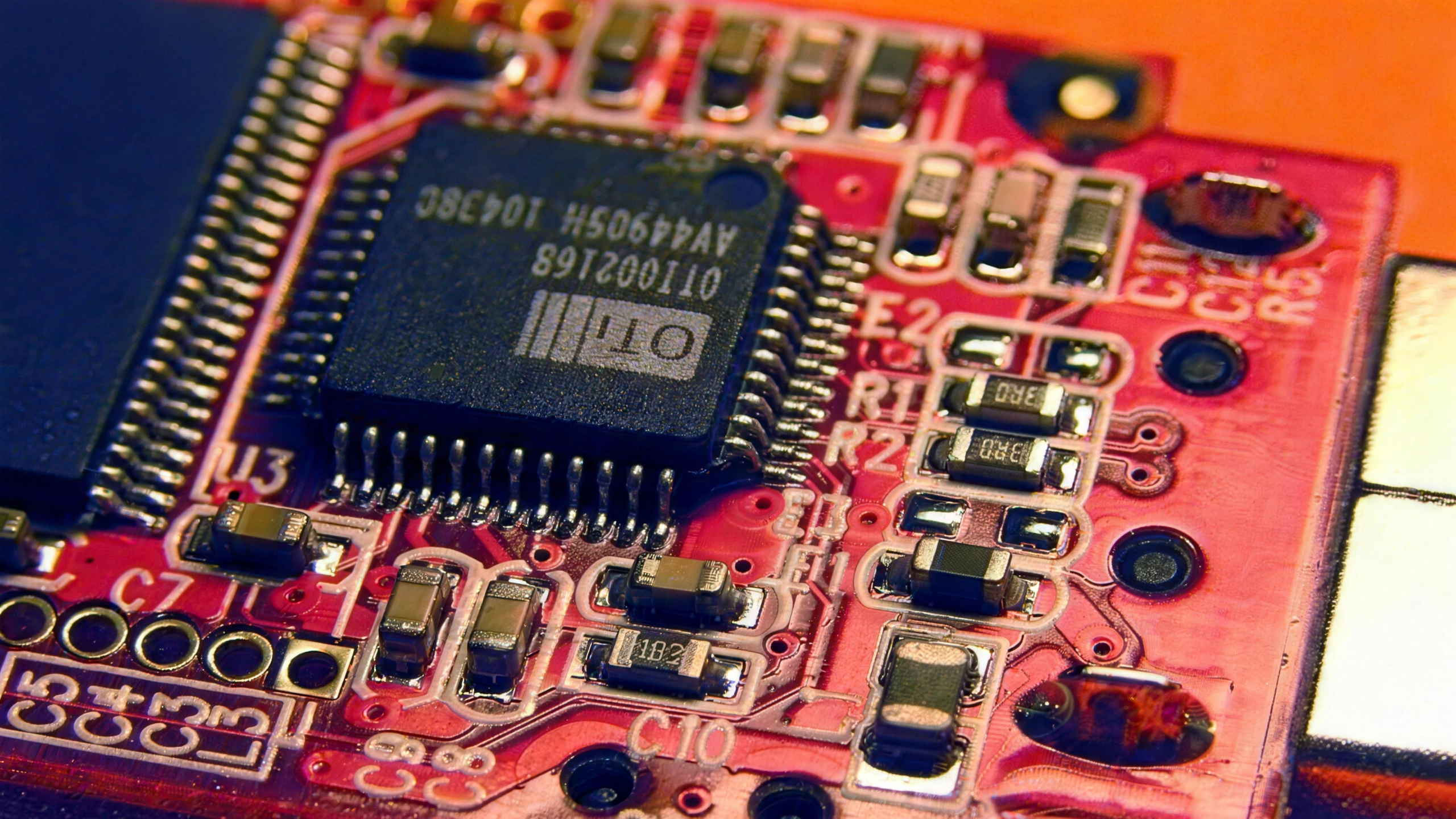
In modern electronics, PCBA manufacturing serves as the critical bridge between circuit design and fully functional products. A professionally managed printed circuit board assembly process ensures electrical reliability, mechanical stability, and consistent production yield.
At advanced EMS facilities, manufacturers implement tightly controlled systems, intelligent automation, and comprehensive inspection strategies to eliminate process variation and reduce defect risks. This disciplined approach enables both high-volume electronics production and complex low-volume builds to achieve consistent quality.
What Is PCBA Manufacturing?
PCBA manufacturing refers to the complete process of assembling electronic components onto a bare printed circuit board (PCB) to create a functional electronic assembly.
This process—also known as:
- PCB assembly
- circuit board assembly
- electronic assembly manufacturing
- SMT assembly services
—transforms design data into a production-ready electronic module.
A robust PCBA production workflow focuses on:
- Accurate component placement
- Reliable solder joint formation
- Full process traceability
- Comprehensive inspection coverage
When properly executed, PCBA fabrication delivers stable electrical connectivity and long-term field reliability.
Core Capabilities of Modern PCBA Manufacturing
Leading electronics manufacturers deploy advanced equipment and process controls to minimize defects and improve first-pass yield.
Design for Manufacturability (DFM) Focus
High-quality PCBA manufacturing begins with a strong emphasis on manufacturability. Engineers analyze layout data early to eliminate potential defect opportunities before production starts.
This proactive approach helps:
- Reduce rework rates
- Improve assembly yield
- Shorten production cycles
- Lower total manufacturing cost
DFM-driven PCB assembly services consistently outperform reactive production models.
3D Solder Paste Inspection (SPI)
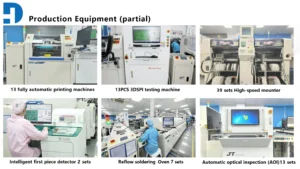
Modern SMT lines use 3D solder paste inspection (SPI) to control one of the most critical steps in surface mount assembly.
SPI systems:
- Measure paste volume and height
- Detect insufficient or excessive deposits
- Identify stencil printing defects early
By catching variation at the front of the SMT process, manufacturers significantly reduce downstream solder defects such as bridges, opens, and tombstoning.
Automated Material Handling and Transport
Advanced PCBA manufacturing facilities implement automated board transport systems to minimize manual handling.
Automation provides several advantages:
- Reduced human-induced variation
- Lower risk of ESD damage
- Improved line efficiency
- More consistent cycle times
Where possible, smart factories integrate fully automated PCB handling to maintain process stability across production runs.
Manufacturing Execution System (MES) Traceability
A proprietary or enterprise-grade Manufacturing Execution System (MES) plays a central role in high-reliability PCBA production.
Modern MES platforms provide:
- End-to-end product traceability
- Enforced process routing
- Real-time production monitoring
- Device history record (DHR) tracking
For regulated industries such as medical, automotive, and industrial electronics, MES-driven PCB assembly is essential for compliance and quality assurance.
Advanced Inspection and Test Strategy
Top-tier PCBA manufacturing providers deploy a layered inspection methodology to maximize defect coverage while controlling cost.
Typical inspection architecture includes:
- SPI (solder paste inspection)
- AOI (automated optical inspection)
- AXI (X-ray inspection)
- ICT (in-circuit testing)
- Functional testing
This multi-stage verification strategy ensures that assembled circuit boards meet electrical, mechanical, and reliability requirements before shipment.
Flexible Volume PCBA Manufacturing
A mature PCBA manufacturing partner supports a wide production range—from prototype builds to full-scale mass production.
Low-Volume / High-Mix Builds
Ideal for:
- New product introduction (NPI)
- engineering validation
- pilot runs
- specialized industrial equipment
These builds require flexible setup and strong process control.
High-Volume Electronics Manufacturing
Optimized SMT assembly lines deliver:
- high throughput
- repeatable quality
- cost-efficient scaling
- stable long-term supply
Scalable PCB assembly services allow OEMs to grow without changing manufacturing partners.
Support for Both Advanced and Legacy Technologies
Modern electronics manufacturing services (EMS) providers must support a wide technology spectrum.
Leading-Edge Technology Support
Advanced PCBA manufacturing lines handle:
- fine-pitch SMT components
- high-density interconnect (HDI) boards
- BGA and micro-BGA packages
- high-speed digital designs
Legacy Product Support
Equally important, experienced assemblers maintain capability for:
- through-hole technology (THT)
- mixed-technology assemblies
- long-lifecycle industrial products
- replacement and sustainment builds
This dual capability ensures long-term product continuity for OEM customers.
Conformal Coating and Encapsulation Options
To enhance environmental protection, many PCBA manufacturing workflows include automated or semi-automated coating processes.
Common protection methods include:
- conformal coating
- potting and encapsulation
- selective coating
- environmental sealing
These secondary processes improve resistance to:
- moisture
- dust
- vibration
- chemical exposure
For automotive, aerospace, and industrial electronics, coating capability is often a critical supplier qualification factor.
Why Professional PCBA Manufacturing Matters
A professionally engineered PCBA manufacturing process delivers measurable business advantages:
- Higher first-pass yield
- Lower field failure rates
- Better thermal and electrical stability
- Improved traceability and compliance
- Faster time-to-market
For OEMs targeting the U.S. market, selecting a mature PCB assembly partner directly impacts product reliability, warranty cost, and brand reputation.
Conclusion
PCBA manufacturing is far more than component placement—it is a tightly controlled, data-driven process that determines the real-world reliability of electronic products. From DFM optimization and 3D SPI to MES traceability and advanced inspection, every step in the PCB assembly workflow must work together to eliminate variation and ensure consistent quality.
OEMs that partner with experienced electronics manufacturing services providers gain a decisive advantage in product performance, scalability, and long-term supply stability.